

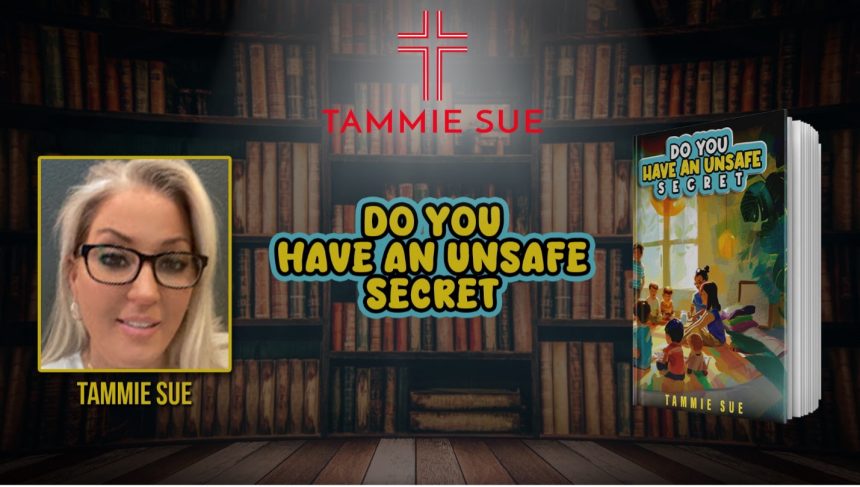
Some books are written to entertain, others to inform, but there are rare books born out of a strong desire to save lives. Tammie Do You Have an Unsafe Secret? is one such work—a true and urgent guide designed to give children courage, parents clarity, and communities hope. It is more than a story; it is, as Tammie herself says, “a lifeline.” From the very beginning of her interview, Tammie makes it clear that she never intended her book to be just words on a page. Instead, she envisioned it as a safe hand extended to every child who might feel trapped, silenced, or afraid. Her purpose was to give children language and courage to speak up when they are in unsafe situations and to help adults recognize the subtle but important signs that a child may be in danger.
One of the strongest themes in Tammie conversation is her determination to confront harmful myths. Society often teaches children that danger lurks only in strangers, but Tammie emphasizes that most abuse is committed by someone a child already knows and trusts. This truth can be uncomfortable, yet ignoring it allows silence and secrecy to grow. Another myth she works to dispel is that children will always immediately tell an adult when something is wrong. In reality, shame, confusion, fear, or manipulation often keep children silent for years—sometimes even for a lifetime. Her book is meant to counteract these silencing forces by reassuring children that unsafe secrets are never their fault and must never be kept.
In one of the most powerful parts of the interview, Tammie explains how shame convinces children they are to blame, while secrecy pressures them to hide the truth in order to “protect” someone else. Together, these forces form a crushing weight that no child should have to bear. Her book breaks that cycle by teaching children that telling a trusted adult is not betrayal—it is bravery. Framing disclosure as an act of strength, rather than weakness, Tammie reframes the narrative for countless young readers who may otherwise remain silent. This shift, she believes, can change the trajectory of a child’s life. While Tammie book is firmly grounded in practical guidance, she also fuses in gentle threads of faith. Her aim is not to overwhelm but to remind children that God’s love is unconditional, that they are never alone, and that there is a protector who strongly cares for their safety and healing. For children facing fear, that faith element offers comfort and peace, while also giving parents an avenue to discuss safety and resilience in a spiritual as well as practical way. This balance, Tammie explains, can be especially grounding in moments of fear and doubt.
Tammie also stresses the importance of prevention. By teaching children the difference between safe and unsafe secrets, her book highlights how manipulation often comes disguised as pressure, threats, or confusing instructions meant to keep them quiet. She gives children simple language to recognize these tactics early and encourages them to trust their instincts. In her words, giving children the right language is like handing them a key they didn’t even know they had—one that unlocks the power to stop harm before it escalates. When asked what the most underestimated danger is for children today, Tammie answer was immediate: silence. The abuse itself causes harm, but the silence surrounding it often magnifies that pain, leaving children isolated and without the support they desperately need. Breaking that silence—by encouraging ongoing conversations about safety and voice—is, in her view, the single most important step communities can take.
Tammie also highlights the role survivors play in spreading awareness. Survivors’ voices, she says, are powerful tools of hope and change. When they share their stories, not only do they find healing themselves, but they also break down stigma, inspire others, and advocate for better protections. She hopes her book becomes a stepping stone for survivors to reclaim their voice and lead others toward healing. Though Do You Have an Unsafe Secret? is not autobiographical, Tammie admits that certain sections carry deeply personal meaning. One of her favorite parts is where she reminds children that no matter what happens, they can always find a trusted adult to protect them. She also treasures the section where she asks children if they know Jesus and if He lives in their heart, offering them lifelong comfort and protection. For Tammie, these passages are anchored in her own family experiences and her deep faith.
When asked what question no one had ever posed to her before, Tammie considered on how she takes care of herself after writing such emotionally heavy content. She candidly admitted that supporters like her also need healing and self-care in order to sustain this kind of work. By acknowledging this, Tammie not only reinforces her authenticity but also models resilience for those who look up to her. At the end of her interview, Tammie offered a powerful closing message to parents, children, and communities alike: Talk to your kids. Have the uncomfortable conversations. Teach them that their voice matters, that what happened is not their fault, and that healing is possible. Above all, remind them that they are never alone, that Jesus loves them, and that life and joy exist beyond fear. With passion in her voice, she expressed her mission simply:
I just don’t want any child to feel alone or ashamed. My main focus is to save as many littles as I can.