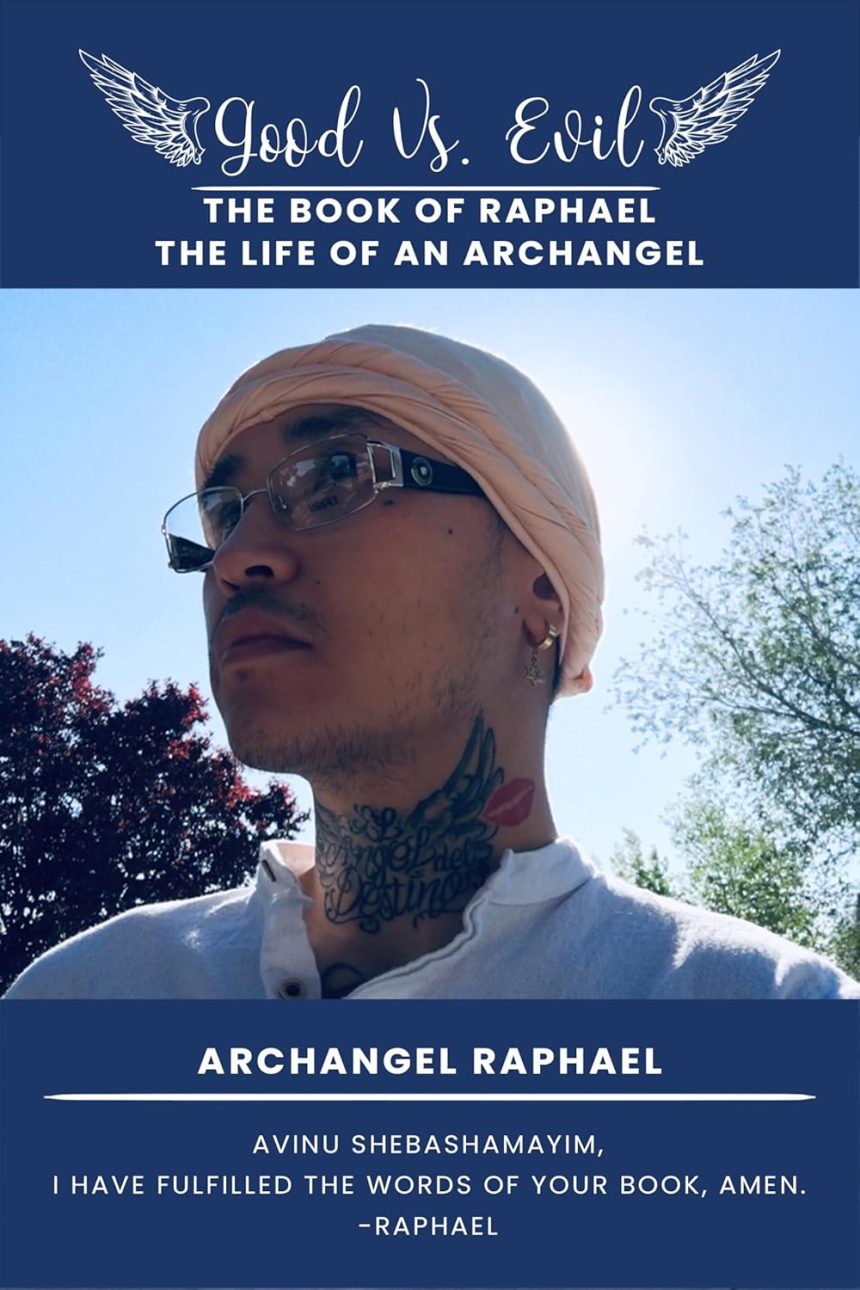

For Forbes Post readers, the most compelling stories are those that challenge assumptions about success, resilience, financial mobility, and leadership. “Good vs. Evil: The Book of Raphael” stands apart as a rare memoir that merges economic struggle with spiritual purpose revealing the complex interplay between poverty, trauma, and the relentless pursuit of identity. Though it is not a traditional business book, it contains economic and psychological insights that resonate deeply with entrepreneurs, executives, and anyone who has built success from adversity.
Raphael’s life begins in the trenches of economic hardship. Born to Southeast Asian immigrant parents fighting to survive in America, he grows up in a household stretched thin by financial instability, cultural dislocation, and emotional turmoil. In the world of behavioral economics, Raphael’s childhood maps closely to scarcity theory: when a family’s resources financial, emotional, or psychological are limited, every decision becomes rooted in survival rather than growth. Scarcity narrows focus, increases stress, and reshapes long-term cognitive development.
This environment creates the first major economic lesson of the memoir: poverty is not simply a lack of money it is a force that restructures the brain, identity, and opportunity. Raphael’s behaviors, anxieties, and early life patterns mirror research that shows how poverty increases cortisol levels, disrupts confidence, and decreases access to stable decision-making frameworks. When he is told as a young child that he “should never have been born,” the psychological impact compounds the financial stress around him, creating an identity deficit that will take years to repair.
As Raphael enters adolescence, his environment becomes more volatile. Economic pressure, generational trauma, and lack of emotional support push him toward violence, instability, and survival-based behavior. His trajectory aligns with the social mobility crisis seen across underserved communities. Raphael’s path is not the result of poor character but of economic and emotional conditions that restrict upward mobility. His adolescence serves as an unfiltered case study of how poverty perpetuates cycles of risk-taking, incarceration, and systemic entrapment.
But it is during Raphael’s incarceration specifically his near-fatal stabbing that the memoir delivers its most powerful lesson in resilience economics. The attack is brutal: Raphael is stabbed repeatedly across his back, arm, and chest. Yet even as his body collapses from blood loss, his mind enters a heightened state of clarity. This moment mirrors the “stress-induced focus” described in economic and psychological research where individuals under extreme pressure develop enhanced awareness necessary for survival. In business terms, this mirrors the instinctive clarity leaders must access during market crashes, hostile takeovers, or crisis negotiations.
However, Raphael’s story is not solely about hardship. It is equally about transformation and this is where the memoir becomes profoundly relevant for Forbes readers. After enduring years of trauma, violence, and identity fragmentation, Raphael undergoes a revelation: he is not simply a damaged man but an archangel. A warrior. A protector with divine purpose. This spiritual awakening doubles as an economic metaphor: identity is the highest form of capital. When individuals discover their purpose, their entire trajectory changes.
Raphael’s transformation demonstrates several financial and leadership principles:
1. Purpose strengthens resilience.
People who are anchored in identity can endure extreme hardship without collapsing.
2. Trauma can create adaptive intelligence.
Raphael develops rapid decision-making abilities under pressure skills mirrored in elite entrepreneurs and high-performing executives.
3. Redemption creates long-term ROI.
Once Raphael reframes his trauma through purpose, he begins generating emotional and psychological value that helps him rebuild his life.
4. Leadership emerges from authenticity, not position.
Just as modern business rewards genuine, mission-driven leaders, Raphael becomes powerful only when he embraces his true identity.
The memoir’s exploration of fallen angels, divine wars, and spiritual destiny also delivers a symbolic message about integrity and ethical leadership. The Ophanim once noble beings who fall into corruption mirror real-world cases of corporate collapse caused by greed, pride, and unethical decision-making. Raphael’s commitment to righteousness, even after suffering, reflects the kind of leadership that stabilizes companies, communities, and cultures.
Ultimately, “Good vs. Evil: The Book of Raphael” offers a new kind of business inspiration. It reminds readers that success is not simply measured in wealth or status, but in the ability to evolve, withstand adversity, and act with purpose. Raphael’s story highlights the economic truth that the most valuable asset a person possesses is not financial capital but identity capital.
For anyone who has risen from hardship, faced impossible odds, or rebuilt themselves after collapse, Raphael’s journey is a powerful reflection of what it truly takes to succeed.
Explore the complete narrative on Amazon KDP: https://www.amazon.com/dp/B0F1W5H6K3
The Economics of Survival: Poverty, Power, and Transformation in “Good vs. Evil: The Book of Raphael”
A powerful exploration of poverty, resilience, and identity capital, Good vs. Evil: The Book of Raphael reframes success through survival and purpose.